Severe Endometriosis Treatment in Abu Dhabi
Endometriosis affects approximately 1 in 10 women and individuals assigned female at birth, yet it remains significantly underdiagnosed—especially in its early stages. Often dismissed as merely "bad period cramps," the symptoms of endometriosis are frequently normalized or overlooked, contributing to an average diagnostic delay of nearly 10 years. While extremely rare, endometriosis can also occur in males, typically in association with certain medical conditions or treatments. Early recognition, proper evaluation, and timely intervention are essential to managing pain and preserving reproductive health.
Endometriosis can significantly impact a woman's physical and emotional well-being—causing severe menstrual pain, chronic pelvic discomfort, and even infertility or subfertility. Fortunately, advanced treatment options available in Abu Dhabi now offer effective solutions to manage symptoms, improve quality of life, and support fertility goals. Discover everything you need to know about endometriosis and its treatment from Dr. Monica Chauhan, a leading endometriosis specialist in Abu Dhabi. Gain expert insights into symptoms, diagnosis, and the most effective management options available today.
What does Endometriosis?
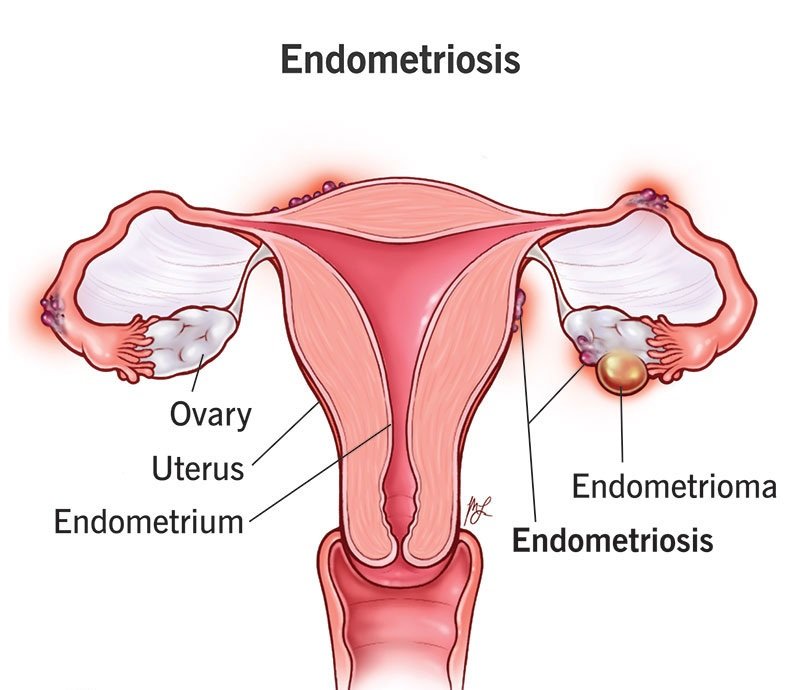
Endometriosis is a condition where tissue similar to the lining of the uterus (womb) grows outside the uterus. This tissue can appear on the ovaries, fallopian tubes, bladder, bowel, and other areas inside the pelvis. Unlike menstrual tissue inside the uterus, it has no way to exit the body, which can cause pain, inflammation, and scar tissue (adhesions).
How Common Is It?
Endometriosis affects approximately 1 in 10 women of reproductive age, especially between ages 25 and 40. It is often underdiagnosed because its symptoms can mimic other conditions, and many women delay seeking help.
Pelvic pain between periods
Pelvic pain between periods refers to discomfort or pain in the lower abdomen or pelvis that occurs outside your usual menstrual bleeding. This pain can vary in intensity and character sharp, dull, cramping, or a feeling of heaviness
Heavy or irregular bleeding
Irregular bleeding refers to bleeding between periods, unpredictable timing of periods, or variable length and flow of menstrual cycles.
Painful bowel movements or urination, especially during periods
Painful bowel movements or urination during periods may signal endometriosis, infections, or other pelvic conditions. If symptoms are severe or persistent, consult your doctor for proper evaluation and treatment.
Ovarian endometriomas are present in 25-50% of women with endometriosis. A deep lesion is seen in around 20% of women with endometriosis. Approximately 15% of women with digestive endometriosis have lesions on the diaphragm.
How Is It Diagnosed?
Diagnosis usually begins with a medical history and pelvic exam. Imaging such as ultrasound or MRI may be used to check for ovarian cysts (endometriomas) or other signs.
The most accurate way to confirm endometriosis is through a laparoscopy—a keyhole surgery where a small camera is inserted into the abdomen to look for and sometimes treat endometrial tissue.
What Are the Common Signs and Symptoms of Endometriosis You Shouldn’t Ignore?
Severe menstrual cramps (dysmenorrhea): Pain that may begin before your period and extend several days into it.
Chronic pelvic pain: Persistent discomfort in the lower abdomen, even outside of the menstrual cycle.
Pain during intercourse (dyspareunia): Discomfort or deep pain during or after sex.
Pain with bowel movements or urination: Especially during menstruation.
Heavy or irregular menstrual bleeding: Including spotting between periods.
Infertility or subfertility: Difficulty conceiving is sometimes the first noticeable sign.
Fatigue: Constant tiredness that doesn’t improve with rest.
Digestive issues: Such as bloating, diarrhea, constipation, or nausea—often mistaken for IBS.
What Are the Treatment Options?
Treatment depends on symptom severity and whether you wish to become pregnant.
✅ Options include:
Pain relief: Anti-inflammatory medications like ibuprofen
Hormonal therapy: Birth control pills, progestins, or medications that reduce estrogen levels
Surgery: Laparoscopic removal or destruction of endometrial tissue
Lifestyle support: Diet changes, physical activity, and stress management strategies
While there’s no permanent cure, many women experience long-term relief with appropriate treatment.
Surgical treatment for endometriosis is often recommended when:
Pain is not relieved by medications
There are endometriomas (ovarian cysts caused by endometriosis)
Fertility is affected
The diagnosis needs confirmation through laparoscopy
Here are the main surgical treatment options:
1. Diagnostic Laparoscopy
A minimally invasive procedure using a thin camera (laparoscope) inserted through small incisions in the abdomen.
Allows direct visualization of endometriosis.
Can also be used to treat endometriosis during the same procedure.
2. Laparoscopic Excision Surgery (Preferred in Many Cases)
Endometrial implants are carefully cut out (excised) from affected areas.
Preserves healthy surrounding tissue.
Often used for deep infiltrating endometriosis (DIE).
Offers better long-term pain relief and lower recurrence than ablation.
3. Laparoscopic Ablation / Cauterization
Burning or destroying endometriosis lesions using heat (electrocautery or laser).
Typically quicker but may be less thorough than excision.
Often used for milder disease.
4. Ovarian Cystectomy
Removal of endometriomas (chocolate cysts) from the ovaries.
Helps improve pelvic pain and may support fertility in some cases.
5. Adhesiolysis
Surgical removal of scar tissue (adhesions) caused by endometriosis.
Helps reduce pain and improve organ function or fertility.
6. Hysterectomy (with or without Oophorectomy)
Removal of the uterus, and sometimes the ovaries and fallopian tubes.
Considered only for severe, treatment-resistant cases, especially when childbearing is complete.
Not a guaranteed cure if endometrial tissue remains outside the uterus.


