
What You Need to Know for a Safe and Smooth Experience
Laparoscopy is a minimally invasive surgery, It involves small keyhole incisions and usually allows for quicker recovery.
Before Your Laparoscopy Surgery
1. Preoperative Assessment
You will have a consultation to review your medical history, current medications, and any allergies. Blood tests or imaging may be ordered to prepare for surgery.
2. Medication Instructions
Inform your doctor about all medications and supplements you take. You may need to stop blood thinners or certain drugs several days before surgery to reduce bleeding risks.
3. Fasting Guidelines
If you will be under general anesthesia, avoid eating or drinking for 6–8 hours before your surgery as instructed by your healthcare provider.
4. Arrange Transportation
You will not be able to drive after surgery, so arrange for someone to bring you to the hospital and take you home safely.
5. Clothing and Personal Items
Wear loose, comfortable clothing on the day of surgery. Leave jewelry, makeup, and valuables at home.
On the Day of Surgery
Arrive at the hospital or surgical center on time.
You may be asked to change into a surgical gown.
The anesthesia team will prepare you for sedation or general anesthesia.
What to Expect During the Procedure
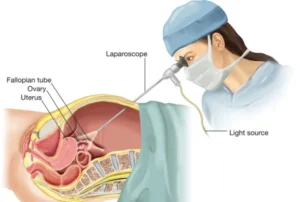
Several small incisions (usually 3-4) will be made in your abdomen.
A thin camera (laparoscope) and surgical instruments are inserted through these incisions.
The surgical time depends on the procedure planned.
You can be discharged the same day or admitted in hospital for 2-3 days depending on the procedure performed.
Recovery Tips After Laparoscopy
Mild abdominal discomfort and shoulder pain are common and usually improve in a few days.
Avoid heavy lifting and strenuous exercise for 1-2 weeks or as advised.
Keep incisions clean and dry.
Follow-up appointments will monitor your healing progress.
When to Contact Your Doctor
Call your gynecologist if you experience:
Heavy bleeding or discharge
Fever over 38°C (100.4°F)
Severe abdominal pain not relieved by medication
vomiting / diarrhoea/ unable to pass flatus, urine or stools
Redness, swelling, or pus from incision sites


